  1. Blog
  2. Article

David Callé
on 21 November 2016
How to build your own Ubuntu Core image and other documentation add-on


2 weeks since the launch of Ubuntu Core 16! Many of you have been asking for help porting Ubuntu Core to new boards, chips or simply building your own images for supported boards like the Raspberry Pi. Wait no more!! Here is the first piece of documentation to help you build an Ubuntu Core image for your preferred board.

New documentation

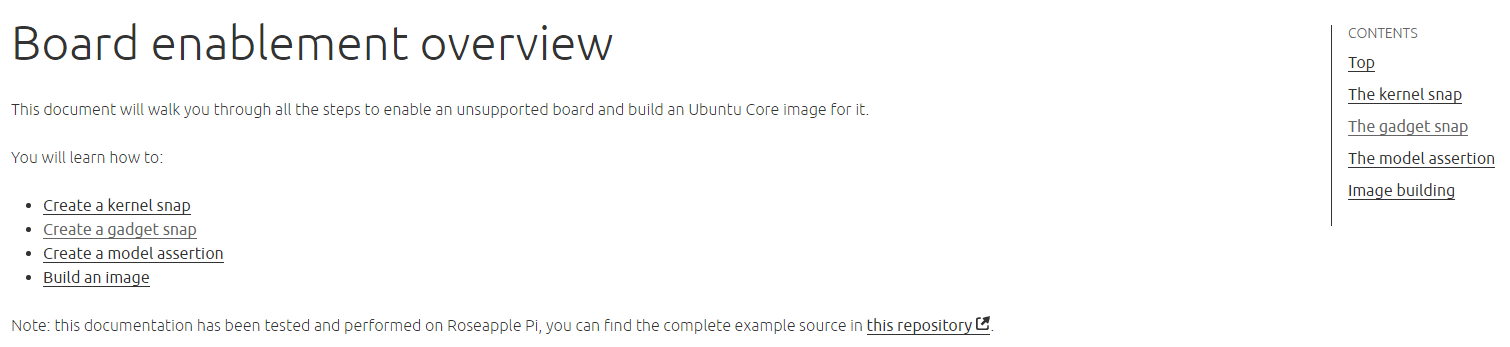
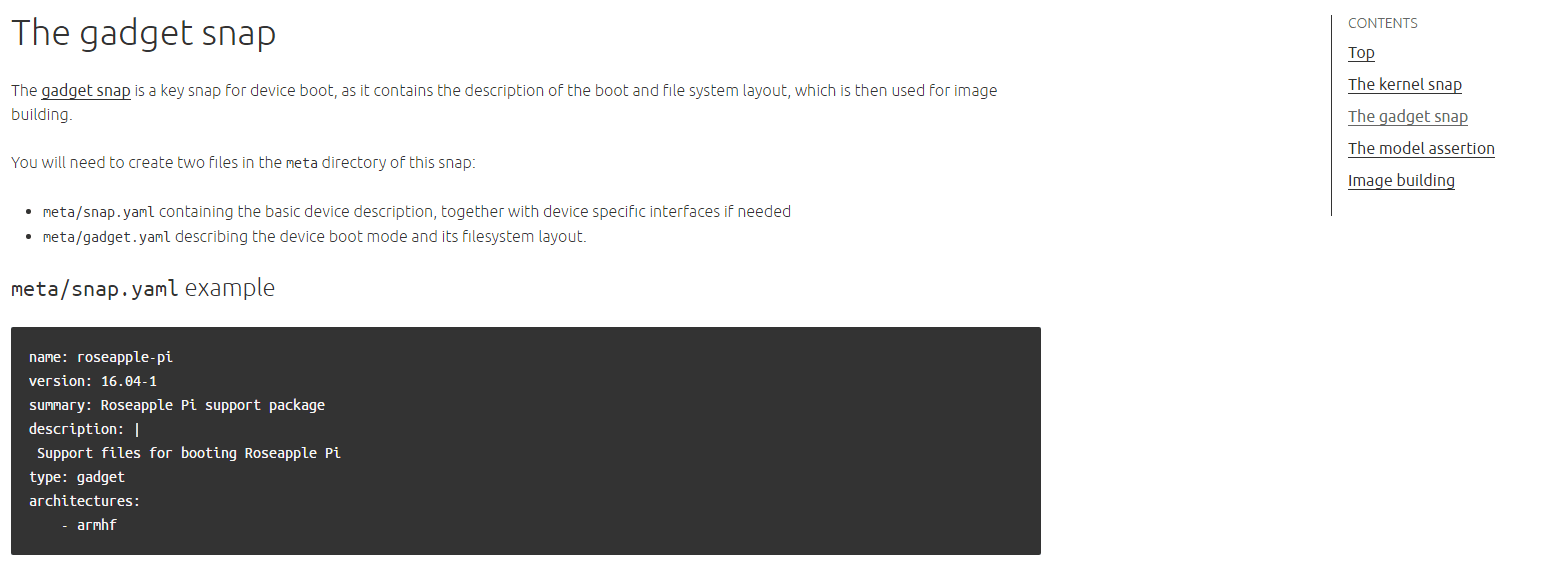
The new Board enablement documentation gives a set of instructions for advanced users to help them enable new boards and build images, including kernel building, gadget snap composition, signature generation and model assertion creation.

The latest new interfaces have been added to the core interfaces reference:

  • `raw-usb` allowing access to connected USB devices
  • `lxd`, allowing usage of the LXD API through the LXD snap

Updates

The Security and sandboxing overview has been augmented with debugging guidance to investigate which authorizations your apps need to request to work within security confinement.

Improved looks

The doc interface also got a few enhancements, with an in-page navigation menu on the right hand side which will help navigate through long pages (and yes there are a few long pages 🙂 .

Related posts


Canonical
23 April 2026

Canonical releases Ubuntu 26.04 LTS Resolute Raccoon

Cloud and server Article

The 11th long-term supported release of Ubuntu delivers deep silicon optimization and state-of-the-art security for enterprise workloads. ...


Samir Kamerkar
22 April 2026

From Jammy to Resolute: how Ubuntu’s toolchains have evolved

Ubuntu Article

We cover new toolchain versions, devpacks and workflows that improve the developer experience. The evolution of Ubuntu’s toolchains story goes beyond just providing up-to-date GCC, LLVM, and Python. It is also about opinionated openJDK variants, task-focused devpacks, FIPS compliant toolchains, and snaps, like the new .NET snap and Snapcr ...


Rob Gibbon
20 April 2026

Hybrid search and reranking: a deeper look at RAG

AI Article

Many of us are familiar with the retrieval augmented generative AI (RAG) pattern for building agentic AI applications – like digital concierges, frontline support chatbots and agents that can help with basic self-service troubleshooting.  At a high level, the flow for RAG is fairly clear – the user’s prompt is augmented with some relevant ...